
The mistakes I made when dating after divorce at age 40+ that cost me time, energy, and self-respect
When I started dating after my divorce, I didn’t put much thought into it. I was excited to “see what was out there” and start moving on.
Turns out, I wasn’t ready for it at all. I walked straight into dating with old wounds, unclear standards, and a nervous system that was unstable AF.
So if you’re thinking about dating again—or already in it—here are the mistakes I made…so you don’t have to learn them the hard way like I did.
Feeling dysregulated from divorce? Download my guide: 50 Self-Care Tips to Make Separation Suck Less.
1. Dating before I learned how to be alone
Like many women at our age, I came out of a divorce having spent almost half my life with someone. Suffice it to say, I did NOT know how to be alone.
I’m talking both physical and emotional aloneness here. Although my ex spent a lot of time in the basement, binging on sports and history documentaries, he was still physically in the same space as me. This provided a sense of comfort, and minimized the need to make plans with other people.
And we still did all the daily things couples do together–watch TV, eat meals, talk about our days. When that was gone, there was definitely a sense of loneliness.
Emotionally, I spent a lot of time centering his needs over my own. When his social anxiety worsened during Covid, I accepted it and didn’t push to go out when it was safe, even though the isolation took a toll on my mental health. I spent a lot of time and energy prioritizing his needs and letting mine take a backseat. I didn’t even know who I was anymore.
When I started dating, it was as much to fill the loneliness as anything else. I wanted someone there with me. I felt comfortable in the role of “wife,” and I found myself wanting to default to that role. Once, I offered to let a guy I’d been casually seeing use my car when his was getting repaired (he declined, thank god!). And I bought him a Christmas gift after he’d been inconsistent in responding to my attempts to hang out. I was bringing wifey energy to situationships that didn’t deserve it. (To be fair, the role of “husband-in-training” was an unfair expectation to place on them as well.)
I didn’t know how to be comfortable on my own. Which brings me to my next point…
2. Dating to feel better and fill a void
I thought I was dating purely for companionship (and, tbh, a bit of casual fun 😎). In hindsight, I realized that a large part of it was to use it as a balm to soothe the pain of my divorce. And to avoid processing what I had gone through.
I was filling a void.
We all know the void: that emptiness inside you that shows up after pain or trauma. You can repair it with reflection and healing, or you can fill it with things like alcohol, drugs, or warm bodies. These distractions seem harmless at first, but they ultimately cause nothing but destruction. And the longer you spend avoiding the void, the wider it becomes. I had chosen to escape the pain instead of facing it.
3. Not knowing what I wanted
I dived headfirst into dating, without knowing what I wanted or didn’t want. Not a good plan!
When you’re not clear on what you want (or don’t want), you are more likely to accept whoever comes along and shows interest. And you put up with a lot more nonsense.
4. Ignoring red flags and silencing my intuition
Perhaps the biggest mistake I made when dating after divorce was ignoring red flags and not listening to my intuition. Like the guy I kept seeing after he referred to women as “whores.” Or the one whose three adult children didn’t talk to him.
Looking back, it seems ridiculous that I put up with this behavior. But in the moment, you want the connection. So you make excuses or tell yourself it’s no big deal. As women, we’re taught to give people (especially men) the benefit of the doubt. But doing so can be dangerous. Men who are problematic and disrespectful now often become violent later.
5. Not setting or enforcing boundaries
I grew up in the culture of Midwest Nice–where everyone is polite, helpful, and as non-confrontational as possible. Where the only boundaries I learned about were those surrounding the Louisiana Territory (thanks, middle school history!).
I didn’t know what I expected in healthy communication, or where to draw the line for mistreatment. And I was worried about seeming rude if I did. As a result, I put up with a lot of bullshit dating behavior–breadcrumbing, avoidance, and outright boundary violations.
6. Confusing chemistry with compatibility
Maybe you’ve seen this meme circulating on your social media:
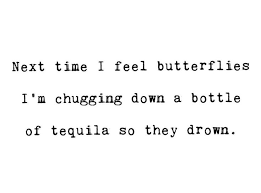
It’s meant as tongue-in-cheek, but there’s actually a deeper psychological truth here.
When we’ve grown up with emotional neglect or inconsistent affection from caregivers (or been the target of peer bullying), we’re taught that love has to be earned. And the belief that we must perform for love gets embedded into our childhood psyches. This type of sporadic attention and conditional love feels normal to our nervous systems, so we subconsciously seek it as adults.
What gets labeled as “chemistry” or “spark” is often anxiety. It’s our body’s response to an old pattern playing out–and not always a healthy one. Chemistry can indicate a connection that’s built on attraction, charisma, and not much else. It’s usually intense at first but burns out quickly because it’s not sustained with substance. True compatibility comes with getting to know one another and determining if your values, communication styles, and worldviews align.
And those butterflies in my stomach? They were warning me that chaos was soon to follow.
7. Putting up with inconsistency
Another mistake I made while dating was putting up with inconsistency. I found many men in today’s dating arena to be flakier than a French croissant. They’d come on strong and then pull away, or they’d make plans one minute and cancel them the next. I never knew what to expect.
This kind of push-pull behavior wreaks havoc on your nervous system. Known as intermittent reinforcement, it produces the same effect in your brain as winning big at the casino, or the first high off a new drug–a huge spike of dopamine, followed by the disappointment and anxiety when you lose (or come down). Every little “win” keeps you hooked and chasing the dragon of that initial high.
So every “wyd” text from Breadcrumbing Benjamin gives you a rush and activates your nervous system. Over time, this becomes addicting and hard to break away from.
What I’d do differently dating after divorce at 40 now (plus gentle advice)
If I could hop in a DeLorean and go back in time, I’d do a few things differently when I started dating after divorce. Here’s what I’d recommend to myself. (Consider these light recommendations to you as well. I want you to avoid the mistakes I made!)
Wait at least a year after divorce to date
I started dating much too soon. If I could go back, I’d wait at least a year until after I was officially divorced to allow myself time to process, heal, and recognize the patterns in my relationships that I needed to work on.
Work on nervous system regulation
Divorce is severely destabilizing and dysregulating to your nervous system. Basically, you’re in survival mode. It’s hard to function from this space, let alone date from it. And you’d give anything for the pain to go away. For me, this meant seeking that dopamine hit that attention from men on dating apps provided.
If you’re feeling destabilized now, here’s how you can feel better quickly (without the dating apps). And for even more feel-better tips, download my guide, 50 Self-Care Tips to Make Separation Suck Less.
Work on my anxious attachment
You may have heard of attachment theory–the psychology behind how the relationships we form in adulthood develop from the care we received as a child. There are four types of attachment–secure, avoidant, anxious, and disorganized (a combination of avoidant and anxious). I, along with a lot of women, have an anxious attachment style.
Those of us with anxious attachment tend to overthink, overanalyze, and dwell. We get stuck in our heads, and we’re prone to fawning for men we’re attracted to. Combine that with men who have an avoidant style, and you have a hot mix of disaster waiting to happen.
When we’re able to get our anxiety under control, we can date from a healthier, more secure place.
For more on this topic and insight into how to discover your attachment style, I highly recommend the book Attached by Amir Levine and Rachel Heller.
Build up my self-worth and self-trust
Finally–and most importantly–I’d work on building my self-worth and rebuilding my self-trust. After divorce, both of these things take a hit. Lacking self-worth makes us prone to manipulation from others. When we’re strong in who we are and recognize our value, we don’t tolerate disrespect–which is, unfortunately–all too common in today’s dating world.